 Click
to
Access
Click
to
Access
OUTSIDE China
Click
to Access
INSIDE
China 
TRAVEL LINKS
Xiamen
Gulangyu
Jimei
Tong'an
Jinmen
Zhangzhou
Quanzhou
Wuyi
#1Fujian
Sites!
Fujian
Foto Album
Books
on Fujian
Readers'Letters
Ningde
Zhouning
Longyan
Sanming
Putian
Bridges
Travel
Info,
Hakka
Roundhouses
Travel
Agents
MISC. LINKS
Amoy
People! 
Darwin
Driving
Amoy
Tigers
Chinese
Inventions
Tibet
in 80 Days!
Dethroned!
Misc.Writings
Latest
News
Lord
of Opium
Back
to Main Page


Click Thumbnail for Larger Image

Click thumbnail for Larger Image

Click thumbnail for
Larger Image

Click Thumbnail for Larger
Image

Click Thumbnail for Larger
Image

Click Thumbnail for Larger
Image


Order
BooksXiamenguide
Forum 
林语堂一位“国际化”的中国作家
Adapted from "Discover
Gulangyu"
Click for English
Version of this Page
Click Here for Lin
Yutang Photo Album (another 20+ photos; most are courtesy of the Lin
Yutang Memorial in the Xiamen University Library, 3/F).
Click for English Version of this Page
Click Here for Lin Yutang Photo Album (another 20+ photos; most are courtesy of the Lin Yutang Memorial in the Xiamen University Library, 3/F).
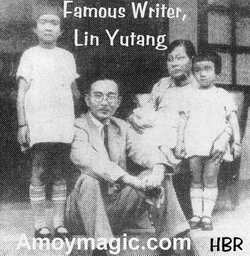
林语堂早年在鼓浪屿上读书,1926年至1927年在厦门大学任教。他是第一个高居《纽约时报》畅销书排名榜首的中国作家。尽管是在赛珍珠的促使下出版了成为1935年畅销书的《吾国与吾民》,林语堂为跨越东西方鸿沟所作的贡献,在同辈中还是无人能及。
只是因为无缘与中国人成为亲朋友好,外国人往往认为中国人陌生,独特,古怪或是难以忍受。不管这些见解多么顽固,只要读了林先生的书,马上就会消除所有模糊的观念,并相信孔子说的一句话,“四海之内皆兄弟”。
——R.Emmet Kennedy著的《The East Speaks to the West》,该文作为《吾国与吾民》的书评刊登于1935年12月8日的《纽约时报》第六部分,pp.1-2。
林语堂1895年10月10日出生在龙溪一个长老会牧师家,是八个孩子中的第七个。林语堂曾写道:“孩提时最早的记忆之一就是从教堂的屋顶上滑下来。”5和父亲一样,林语堂什么书都看。一个在厦门的牧师Abbe
Livingston Warnshuis6,相信新中国将要建立,并为培养领袖人物而热心推动高等教育。他还为孩子们提供有关基督教和科学问题的书和小册子,提高他们的智力。这对于年少的林语堂是件幸事,却造成林语堂的二姐、也是他最好的朋友的悲剧。
林语堂曾写道,父亲不让二姐上大学是因为“大学教育对一个女孩来说是奢侈的事,我们家实在负担不起。”这个聪明的女孩上不了学,在22岁时结了婚。林语堂离家读大学时,二姐给了他四毛钱,并对他说:
“你就要上学了。别浪费这个机会。做个好人,做个有用的人,做个名人……这就是我对你的希望。”我知道她多么渴望读书,因此格外感受到这些话的份量,在心里沉甸甸的,并产生一种负罪感,我觉得自己是在代替二姐上大学。7
5 《从异教徒到基督徒》第19页,该书1959年由俄亥俄州克利夫兰的世界出版公司出版。
6 Warnshui: 1900至1905年在厦门的一间美国传教士的归正教堂。
7 林语堂著的《八十自叙》,1975年由台北美亚图书公司出版。
Back to top
Or Click
Here for Lin Yutang Photo Album
一年之后,怀孕七个月的二姐死于鼠疫。在二姐的影响下,林语堂一直努力奋斗,不仅成为“有用的名人”,还与社会不公、特别是针对妇女的不公待遇作斗争。
林语堂10岁时,他和另外两个兄弟一起在厦门美国归正教会办的养元小学和洵源书院读书。1912年,他进入上海圣约翰大学神学院学习。在运动方面他成绩突出,还参加过1916年的上海远东奥林匹克运动会。但他又是个离经叛道的学生,时常逃课,书读得很多,可往往与课业无关(他曾描写在公民法的课上偷看历史书的情形)。
Back to top
Or Click
Here for Lin Yutang Photo Album
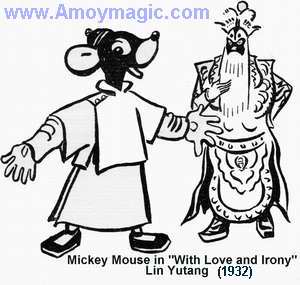 林语堂渐渐厌恶起西式教育,认为让他脱离了中国文化的根本,当他转而投入到中文学习中去后,他又摒弃了基督教的文化根本8。他离开神学院,但仍留在圣约翰大学直到1916年毕业。之后他在北京著名的清华大学任教。他写道:
那时住在北京,能接触到真正的中国社会,原原本本地看到古国的风貌……黄色琉璃瓦的皇宫,红陶土做的寺庙高墙,蒙古骆驼,附近就是长城和明陵——北京代表了中国,真正的中国!9
林语堂醉心于东方文化,也不忘西方文化,在钻研中国哲学的同时他继续在基督教礼拜日学校教课,还写下这样一副对联:
“两脚踏东西文化,一心评宇宙文章。”
林语堂1919年去哈佛大学读书,但毕业前又离开去了欧洲。具有讽刺意味的是,他在德国莱比锡的耶那大学取得了硕士和中国语言学博士学位。林语堂喜欢留学生活,但他又质疑西方人凡事注重逻辑和科学方法。他在《吾国与吾民》中这样写道:
“在中国人的心灵中,科学方法不能得到发展的原因是很容易理解的,因为科学方法除了要求分析性思维之外,总是免不了要有一些枯燥的工作要做。而中国人则相信自己的庸见与洞察力的闪光。
Back to top
Or Click
Here for Lin Yutang Photo Album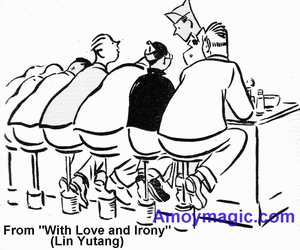
推理的方法在应用到人际关系(中国人最感兴趣的东西)时,常常导致一种愚蠢的结论,这在美国大学里并不罕见。今天有许多用推理方法写成的博士论文,会使长眠地下的培根感到不安。没有一个中国人会愚蠢到去写一篇关于冰淇淋的博士论文,并且在一系列的观察与分析之后得出令人瞠目的结论说‘糖(在冰淇淋的制作中)最重要的功能是使冰淇淋发甜’,或者在对‘四种洗碟方法的时间与运动方法比较’进行研究之后,很高兴地下结论说‘弯腰提取物件的动作是很累人的’……
这种愚蠢的方法也许有助于商业运作,但我想中国人如果用片刻的直觉与常识,也完全能得出同样正确的结论。”10
在1937年出版的畅销书《生活的艺术》中,林语堂强调了“近情精神”比逻辑重要。
Back to top
Or Click
Here for Lin Yutang Photo Album
“与逻辑相对的有常识,或更好一些的说法:还有近情的精神……这近情的时代,如果有来临的一天,则就是和平时代的来临……近情精神是中国所能贡献给西方的一件最好的物事……人性化的思想其实就是近情的思想。专讲逻辑的人是永远自以为是的,所以他是不近人情,也是不对的;至于近情的人则自己常疑惑自己是错的,所以他永远是对的。”11
林语堂那些主题深刻的文章受到全世界读者的喜爱,例如他热爱闲游,以及他坚信从根本上看,人们都是相似的。
“我只想(在书中)表现一种中国最优越最聪慧的哲人们所见到而在他们的文字中发挥过的人生观和事物观。我知道这是一种闲适哲学,是在异于现代时代里的闲适生活中所产生。我总觉得这种人生观是绝对真实的。人类心性既然相同,则在这个国家里能感动人的东西,自然也会感动别的国家的人类。”12
在20年代林语堂著述广泛,到了30年代,对他作品的评论文章不时见诸《纽约时报》报端。林语堂和孙中山的遗孀宋庆龄合作,成立中国民权保障同盟。1938年以后他在欧洲游历,写下小说三部曲《京华烟云》、《风声鹤泪》和《朱门》。
Back to top
Or Click
Here for Lin Yutang Photo Album
1936年,林语堂回到美国。从1959年起,定期去纽约麦迪逊大街的长老会教堂。他写道:
“回顾我的一生,30年来我就像个孤儿般活在人世。从现在起我不再是孤儿了,我又回到迷失的起点。重新参加礼拜的那个星期天早晨,对我而言就像回到家一样。”13
林语堂1966年在台湾定居,1976年3月逝世,享年80岁。《纽约时报》的讣告这样评价他:
“林语堂,诗人,小说家,历史学家,哲学家。他向西方诠释中国这个多灾多难大国的风土人情,以及中国人的所盼、所虑和所思,在这方面他成绩卓著,无人能比。”14
“最难的事之一就是让我的中国读者们接受这样的观念:幽默是生活的一部分,即使在严肃文学中也应该占有一席之地。这和下面这件事一样困难重重:我一直在说服他们相信孔子是个爱开玩笑的普通人,甚至会拿自己开涮。”
摘自林语堂的《讽颂集》
8 在皈依基督教后,1959年林语堂写下《从异教徒到基督徒》,文中他将这段人生描绘成一个三十年的“大圈子”。
9 《从异教徒到基督徒》第33页。
10 《吾国与吾民》第85页。
11 《生活的艺术》第424至425页。
12 《生活的艺术》第1页。
13 “Why I Came Back to Christianity”,1959年4月13日出版的“Presbyterian Life”第13-15页。
14 “Lin Yutang, 80, Dies; Scholar-Philosopher”, 1976年3月27日《纽约时报》。
Back
to top
Click
Here for Lin Yutang Photo Album
Lin Yutang, who was schooled on Gulangyu and taught at Xiamen University from 1926-1927, was the first Chinese author to reach the top of the New York Times bestseller list. Pearl S. Buck had to urge the anxious author to publish his 1935 bestseller “My Country and my People,” but Lin went on to do more than any one in his gen-eration to bridge the gulf between East and West.
“However inclined one may be to regard the Chinese as strange, peculiar, fantastic, or impossible, for no other reason than that one has never been fortunate enough to gain their friendly, intimate acquaintance, the reading of Mr. Lin's book will very soon dissipate any notion of uncertainty and assure one of the truth[s] of the Confucian statement, that ‘Within the four seas all men are brothers.’” “The East Speaks to the West,” The New York Times review of “My Country and My People” 8 December, 1935
Lin was born the
seventh of a Presbyterian minister’s eight children in Longxi on
October 10th, 1895. Like his father, Lin read everything he could lay
his hands on. An Amoy missionary, Abbe Livingston Warnshuis, ardently
promoted higher education to develop leaders for the new China he believed
was coming, and fueled the family’s intellectual fire by sending
them books and pamphlets on both Christian and scientific issues. It was
a blessing for young Lin Yutang, but led to tragedy for his second oldest
sister and best friend, Mei-Kung.
Back to top
Or Click
Here for Lin Yutang Photo Album
Lin’s father refused to let Mei Kong attend college because, as
Lin wrote, “college education for a girl was a luxury which our
family simply could not afford.” Denied an education, the bright
girl married at age 22, and when Lin left for college she gave him forty
cents and said,
“…you are going to college. Don’t waste your opportunity. Be a good man, a useful man, and a famous man… That is your sister’s wish for you.’ Knowing her desire so well, I felt the full force of these simple words. It made me guilty about the whole thing. They burned into my heart with the oppressive weight of a great load, so that I had the feeling I was going to college in her place.”
Just a year later,
the 7-months pregnant Mei-Kung died of the plague, and a haunted Lin strove
to become not only “useful and famous” but also to fight injustice,
especially against women.
Back to top
Or Click
Here for Lin Yutang Photo Album
When Lin was ten, he and his two brothers studied in Amoy at the American
Reformed Mission’s Yangyuan Elementary School and the Xunyuan School.
In 1912, he entered the Theological School of Shanghai’s St. John
University. He excelled at athletics, and even par-ticipated in the 1916
Far Eastern Olympics in Shanghai, but he was an unorthodox scholar. He
often skipped classes, and though he gained a reputation as an avid reader,
the books he devoured often had no relation to his classes (he wrote of
how he secretly read history books during a civil law class).
Lin gradually came to resent that Western education had denied him his
Chinese roots, and as he dove into Chinese studies, he abandoned his Christian
faith . He left the Theological School, though he remained in St. John’s
until his graduation in 1916, after which he taught at Beijing’s
prestigious Tsinghua University. He wrote,
“To live in Peking then was to come into contact with authentic
Chinese society, to see, as it were, ancient China made manifest….Peking
was China, authentic China, with its yellow-roofed palaces and terra-cotta
temple walls and its Mongolian camels and nearness to the Great Wall and
the Ming tombs.”
Back to top
Or Click
Here for Lin Yutang Photo Album
Lin longed for the East but never quite let go of the West. He continued
teaching Christian Sunday School even while delving into Chinese philosophy.
Torn, he wrote in a couplet,
“One mind seeks the learning of ancients and moderns;
Two legs straddle the cultures of East and West.”Lin went to Harvard in 1919 but before graduation left for Europe, where he completed his M.A. and, ironically, a Ph.D. in Chinese studies in the University of Jena in Leipzig, Germany. Lin enjoyed studying abroad, but he had qualms about Westerners’ preoccupation with logic and scientific method. In “My Country and My People” he wrote,
“It is easy to see why the Chinese mind cannot develop a scientific method; for the scientific method, besides being analytical, always involves an amount of stupid drudgery, while the Chinese believe in flashes of common sense and insight. And inductive reasoning, carried over to human relationships (in which the Chinese are primarily interested) often results in a form of stupidity not so rare in American universities. There are today doctorate dissertations in the inductive method which would make Bacon turn in his grave. No Chinese could possibly be stupid enough to write a dissertation on ice-cream, and after a series of careful observations, announce the staggering conclusion that ‘the primary function of sugar [in the manufacture of ice-cream] is to sweeten it’; or after a methodical study in ‘Time and Motion Comparison on Four Methods of Dishwashing’ happily perceive that ‘stooping and lifting are fatiguing’…."
Back to top Or Click Here for Lin Yutang Photo Album“This sort of stupidity, although useful to business advertisement, could really be arrived at, I think, just as correctly by a moment of Chinese common sense and ‘intuition.’”.
In his 1937 bestseller “The Importance of Living”, Lin emphasized the “spirit of reasonableness” over logic.
“In contrast to logic, there is common sense, or still better, the Spirit of Rea-sonableness. …The Reasonable Age, if that should ever come about, will be the Age of Peace….The Sprit of Reasonableness is the best thing that China has to offer the West….Humanized thinking is just reasonable thinking. The logical man is always self-righteous and therefore wrong, while the reasonable man suspects that perhaps he is wrong and is therefore always right.” Back to top Or Click Here for Lin Yutang Photo Album
Lin delighted readers around the globe with essays on such profound subjects as his love for loafing, and his insistence that, bottom line, we are all alike:
“I am interested only in presenting [in this book] a view of life and of things as the best and wisest Chinese minds have seen it and expressed it in their folk wisdom and their literature. It is an idle philosophy born out of an idle life, evolved in a different age, I am quite aware. But I cannot help feeling that this view of life is essentially true, and since we are alike under the skin, what touches the human heart in one country touches all.”
Lin wrote widely during the 20s and by 1930, the New York Times was writing commentaries on his works. Lin worked with Song Qingling, widow of Sun Yatsen, to create the China Democratic Rights Insur-ance League, and after 1938 he lived and traveled in Europe, where he wrote the trilogy consisting of “Peking Cloud” , “Wind and Crane’s Tear”, and “The Red Door”.
Lin returned to the U.S. in 1936 and in 1959 began attending New York City’s Madison Avenue Presbyterian Church. Lin settled down in Taiwan in 1966 and passed away in March, 1976, at the age of 80. The New York Times obituary noted,
Lin Yutang, poet, novelist, historian and philosopher, had no peer as an interpreter to Western minds of the customs, aspirations, fears and thoughts of his people and their country, China, the great and tragic land.
Click Here for Lin Yutang House (Taiwan) Site
For more on Magic Amoy's wonderful peoples and places, read "Amoy Magic--Guide to Xiamen and Fujian!"
Favorite
Fujian Sites Fujian
Foto Album Xiamen
Gulangyu
Fujian
Guides Quanzhou
Zhangzhou
Longyan
Wuyi
Mtn Ningde
Putian
Sanming
Zhouning
Taimu
Mtn. Roundhouses
Bridges
Jiangxi
Guilin
Order
Books
Readers'
Letters
 Click
to E-mail
Click
to E-mail  Readers'Letters
Last Updated: May 2007
Back
to Top
DAILY
LINKS
FAQs
Questions?
Real
Estate
Shopping
Maps
Bookstores
Trains
Busses
Car
Rental
Hotels
News
(CT)
Medical
& Dental
YMCA
Volunteer! 
XICF
Fellowship
Churches


Temples Mosque
Expat
Groups
Maids
Phone
#s
EDUCATION
Xiamen
University
XIS(Int'l
School)
Study
Mandarin
CSP(China
Studies)
Library
Museums
History
DINING
Restaurants
Asian
Veggie
Junk
Food
Chinese
Italian
International
Visas
4 aliens
RECREATION
Massage!
Beaches
Fly
Kites
Sports
Boardwalk
Parks
Pets
Birdwatching
Kung
Fu Hiking
Music
Events
Festival&Culture
Humor&Fun
Fotos
BUSINESS
Doing
Business
Jobs!(teach/work)
Hire
Workers
Foreign
Companies
CIFIT
(Trade Fair)
MTS(Translation)
Back to Top