 Click
to
Access
Click
to
Access
OUTSIDE China
Click
to Access
INSIDE
China 
TRAVEL LINKS
Xiamen
Gulangyu
Jimei
Tong'an
Jinmen
Zhangzhou
Quanzhou
Wuyi
#1Fujian
Sites!
Fujian
Foto Album
Books
on Fujian
Readers'Letters
Ningde
Zhouning
Longyan
Sanming
Putian
Bridges
Travel
Info,
Hakka
Roundhouses
Travel
Agents
MISC. LINKS
Amoy
People!
Darwin
Driving 
Amoy
Tigers
Chinese
Inventions
Tibet
in 80 Days!
Dethroned!
Misc.Writings
Latest
News
Lord
of Opium
Back
to Main Page

Order
BooksXiamenguide
Forum 
 Boon-Keng,
"The Sage of Singapore"
Click for Chinese/中文
Boon-Keng,
"The Sage of Singapore"
Click for Chinese/中文
Ofc.
of Int'l Exchange (ICE)Teach! Overseas
Educ. Collegee Study! CSP
China Studies Program International
Exchanges XMU's
Many Firsts! MBA
Center (China's 1st MBAs) XMU
Library Chinese-European
Art Center XMU
Foundation College Xiada
Today! Tour
XMU! 104
XMU Sites!
XMU History: XMU
Founder Tan Kah Kee (Henry Ford of Asia)
Wang
Yanan --Scientist Lu
Xun Father of Modern Chinese Lit.
Dr.
Lim Boon-keng, "Sage of Singapore" Lin
Yutang Lin
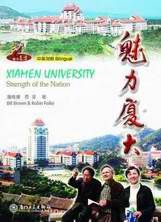
Photo Album XMU--Strength
of the Nation (by Dr. Bill &
Robin)
(Adapted From “Discover Gulangyu”)
Kipling said East and West would never meet, but they did meet in the
2nd president of Xiamen University, Dr. Lin Wenqing, who was called the
Sage of Singapore by Chinese and foreigners alike. Xiamen University’s
founder, Tan Kak Kee, wrote that Lin was “well versed in Western materialistic
sciences and Chinese cultural spirit.”
Educated first in a Hakka temple and then at Raffles Institution, Lin
was the first Chinese awarded the Queen’s Scholarship, and earned first
class honors in medicine at the University of Edinburgh. But while Westerners
admired Lin, the Chinese at Edinburgh spurned him because of his poor
written and spoken Mandarin Chinese. According to some sources, English
remained his strongest language, and when he gave a speech at Xiamen University
in 1926 he had to use an interpreter! But we know that he did master at
least Minnan Dialect and Cantonese.
In 1905, Lin set up a private hospital for prostitutes and founded the
Anti-Opium Society (ironic, since both his father and China-born grandfa-ther
were opium farmers). Lin excelled at business, particularly the rubber
industry, shipping and banking, and helped found the Singapore Chinese
Chamber of Commerce. A pioneer Chinese financier, he partnered with Huang
Yizhu to start the Hefeng Bank and Overseas Chinese Bank. West-erners
and Chinese alike sought the Sage’s wisdom. He was adviser to the British
in the Legislative Council and the Chinese Advisory Board, and at-tended
the coronations of King Edward VII in 1902 and King George V in 1911.
Lin really showed his colors during World War I when he raised funds for
the Prince of Wales relief fund and for war planes, and in 1918 was awarded
the Order of the British Empire.
In 1900, Lin helped found the Straits Chinese British
Association (of which he was elected president twice). He also started
the Chinese “Philo-mathic” Society for the study of Chinese language,
Western Music, and Eng-lish literature, and the Singapore Chinese Girls’
School. And perhaps be-cause of his own difficulty in mastering Mandarin,
he urged that Chinese children be taught in Mandarin, even going so far
as to organize Mandarin language classes in his own home.
Lin was president of Xiamen University from 1921 until 1937, but after
returning to Singapore he suffered greatly at the hands of the Japanese,
who tortured his wife to force him into working for them. In 1949, Lin
became the first president of the China Society, and supported that work
until his death on New Year’s day in 1957. He left 3/5 of his estate,
including his Brush Mountain home, to Xiamen University. The estate is
run down nowadays, but still holds a special place in the hearts of those
grateful for this man who wrought great change in the lives of Chinese
both at home and abroad.
Dr. Lin in a Foreigner’s Eyes
(by Averil Mckenzie, Gulangyu resident, 1920s)
“A year previously, Dr. Lim Boon Keng had been appointed
President of the new University of Amoy. A graduate in medicine of Edinburgh
University, he no longer practiced, but still lived part of the year in
Singapore, where he had once done so, and it was there that we first met
him and his wife.
In Kulangsu, they and their family occupied a house delightfully set in
a garden on one of the highest points of the island. A few days after
our arrival we ate there. The Lim family's friendship endures to this
day, so I cannot, with any certainty, recall of what we talked. I remember
the catholic collection of English books on the ground floor, cockroach-scraped
and silver-fish-nibbled, as all our books became, but all well-used and
alive; and above, the billowing of white curtains, high and airily in
white light; Mrs. Lim's dark hair and poised grace against white walls,
and the agony of a mouthful of chili sauce which I mistook for tomato.
“Dr. Lim was short, square, with large, mild brown eyes, but he was a
fighter of astonishing range and vigor. Apart from his continuous battle
for Western concepts of hygiene against ignorant and superstitious col-leagues
when he was medical adviser to the Minister of the Interior and Inspector-General
of the Peking hospital under the Chinese Government, he had championed
any number of causes unrelated to his profession. One of these campaigns
had been against pigtails. In this he was not alone but we felt that for
him, as a Fukienese, it was particularly appropriate be-cause, for more
than two hundred years after the defeat of Koxinga and his supporters
in 1683, the Fukienese peasants, forced to be 'tartarized' and to wear
queues, coiled these symbols of subjection round their heads and hid them
under turbans.
“Dr. Lim had traveled both to widen his own and other
people's [views]…As a vigorous advocate for the adoption of kuo-yu, he
had gone to Java to preach its benefits to the Chinese schools there.
He and Mrs. Lim had explored Europe as well as attending the German, French
and Italian medical conferences to which he was officially delegated.
He was one of the first to urge his country-men in Malaya to plant rubber,
and was always ready to pursue new ideas offered by friends or books.
'Reading,' he would say, 'and the cultivation of friends are as a fan
to the flame of the mind and make it burn more brightly.' He had what
I, as a European, can only call a Latin enthusiasm. It was, I suspect,
as much for this comprehending eagerness as for his medical skill, that
Sun Yat-sen had chosen him as a private secretary as well as physician.
But with all his preoccupations for the future of his countrymen he never
undervalued his country's past and her perennial philosophy. He had published
various books on Confucianism, and a few years after we met, I was to
engrave a frontispiece for his translation of the classic Li Sao [Dr.
Lim died at the age of 88, in Singapore, shortly after I wrote this chapter].”
林文庆博士(1869—1957)—“新加坡贤哲”
《魅力鼓浪屿》
鲁耶尔?吉卜林说,东、西方永远碰不到一块儿。然而,厦门大学的第二任校长林文庆博士却能将这二者融会贯通。中外人士一致推崇他为 “新加坡贤哲”。厦门大学的创始人陈嘉庚评述林文庆时写道:“(他)能通西洋物质之科学兼具中国文化之精神。”
林文庆最早就读于福建会馆,而后升入莱佛士学院,成为获得女皇奖学金的第一个中国人。后来在爱丁堡大学学医,获得最高荣誉。正当西方人钦佩林文庆时,爱丁堡大学的中国人却因林文庆糟糕的汉语笔头和口头而对他嗤之以鼻。根据某些资料所说,英语仍是他最强的语言。1926年他在厦大做演讲时还不得不靠人翻译呢!但我们知道,他至少懂得粤语和闽南语。
1905年,林文庆开了一家为娼妓治病的私立医院,并创立了“反鸦片社团”(具有讽刺意味的是,他的父亲和出生于中国的祖父竟都是种鸦片的)。林文庆善于经营生意,尤其在橡胶、船运和银行等行业收入颇丰。他还参与创立“新加坡中华总商会”。作为华人金融家先驱,他和黄奕住合资创建“和丰银行”和“华侨银行”。中国人和西方人都推崇这位贤哲的智慧。他当过英国立法院顾问及中国顾问团顾问,出席过1902年爱德华七世和1911年乔治五世的加冕典礼。林文庆在一战期间表现出色,为威尔士王子救济基金和购置战斗机筹款,于1918年获得大不列颠帝国勋章。
1900年,林文庆参与创立“海峡英籍华人公会”,两次当选为该会主席。他还创办了“华人Chinese Philomatic社团”,开展中文、西方音乐和英国文学等学科的学习活动,还创办了“新加坡华人女子学校”。也许是由于他本人汉语学得不理想,他竭力主张华人应从小开始学习汉语,甚至在自己家里组织汉语学习班。
从1921年到1937年,林文庆担任厦门大学校长。卸任后返回新加坡,却落入日本人之手,深受磨难。日本人拷打他的妻子,逼他为他们做事。1949年,他成为“中华社团”的第一任主席,一直到1957年元旦他去世为止。他将五分之三的房产捐给厦大,鼓浪屿笔架山的房子也在捐赠之列。那座老房子如今已经破旧不堪了,但因其主人曾经谋求改善海内外华人的生活,它在对林心存感念的人们心中仍占有特别的位置。
一个外国人眼里的林博士
(《绿姜根》 Averil Mckenzie,1920年代鼓浪屿居民)
“一年前,林文庆博士被任命为厦门大学校长。尽管他是爱丁堡大学的医科毕业生,他已不再行医了,但仍像以前那样,一年当中他还是有一段时间在新加坡度过。也正是在新加坡,我第一次见到他和他太太。在鼓浪屿,他家拥有一座舒适的房子,坐落在岛上一制高点的花园里。我们到达后过了几天在那儿吃了一次饭。林家的友谊延续至今,所以我无法准确回忆起那天我们都谈了些什么。我记得,存放在一楼的各种英文藏书已被蟑螂咬出碎屑,也被蠹虫蛀过,就像我们所有的书那样,只不过因主人经常翻阅而显出生气。在高处,白色窗帘在白光中轻快地飞扬。林太太仪态典雅,乌黑的头发与白墙形成鲜明的反衬。还有,我错将辣椒酱当作番茄酱吃了一大口,痛苦不堪。”
“林博士长得矮矮壮壮,一对棕色的大眼睛流露着温和的神情。但他在诸多领域却是个斗志旺盛的斗士。在担任中国政府内务部医学顾问和北京医院总监时,他坚持用西方的卫生保健观念来反击愚昧和迷信团体。除此之外,他还在一些与他的专业无关的领域为坚持真理而进行斗争。其中一项是反对留辫子。在这一点上,他并不孤立。但我们觉得,林文庆作为一个福建人,这样做是情理之中的事情。因为,在郑成功和他的支持者们1683年失利以后的两百多年里,福建的父老乡亲被迫‘满人化’、留长辫,他们将这意味着被异族统治的标志物盘在头上,包裹在头巾里。”
“林博士游历各地,既为开阔自己的眼界,也为扩展别人的视野……作为一个极力推广国语的倡导者,他奔赴爪哇,向那里的华人学校宣传国语的种种好处。他被公派到德国、法国和意大利出席医学会议时,和他太太游历了欧洲。他是第一个力促马来亚的华人种植橡胶的,他也时刻准备探讨朋友或书本所提供的新思想。他说,读书和交友如一把扇子,可以使思想的火苗燃烧得更亮堂。以我作为一个欧洲人看来,他具有一种拉丁式的热情。我猜想,孙逸仙选择他作为机要秘书兼医官,不单是看重他的医学技能,同样也器重他追求真理的那份渴望。他关心国人的未来,从未轻视自己国家的历史及其世代传承的民族哲学。他出版过诸多关于儒家思想的书。在我们认识几年后,我曾打算为他的译作古诗《离骚》雕刻一幅卷首插图。[在我写完这章后不久,林博士在新加坡去世,享年88岁。]。”
TRAVEL
LINKS Favorite
Fujian Sites Fujian
Foto Album Xiamen
Gulangyu
Fujian
Guides Quanzhou
Zhangzhou
Longyan
Wuyi
Mtn Ningde
Putian
Sanming
Zhouning
Taimu
Mtn. Roundhouses
Bridges
Jiangxi
Guilin
Order
Books
Readers'
Letters
Favorite
Fujian Sites Fujian
Foto Album Xiamen
Gulangyu
Putian
 Click
to E-mail
Click
to E-mail  Readers'Letters
Last Updated: May 2007
Back
to Top
DAILY
LINKS
FAQs
Questions?
Real
Estate
Shopping
Maps
Bookstores
Trains
Busses
Car
Rental
Hotels
News
(CT)
Medical
& Dental
YMCA
Volunteer! 
XICF
Fellowship
Churches


Temples Mosque
Expat
Groups
Maids
Phone
#s
EDUCATION
Xiamen
University
XIS(Int'l
School)
Study
Mandarin
CSP(China
Studies)
Library
Museums
History
DINING Tea
Houses
Restaurants
Asian
Veggie
Junk
Food
Chinese
Italian
International
Visas
4 aliens
RECREATION
Massage!
Beaches
Fly
Kites
Sports
Boardwalk
Parks
Pets
Birdwatching
Kung
Fu Hiking
Music
Events
Cinema
Festival&Culture
Humor&Fun
Fotos
BUSINESS
Doing
Business
Jobs!(teach/work)
Hire
Workers
Foreign
Companies
CIFIT
(Trade Fair)
MTS(Translation)
Back to Top